Premium Internationalized Domain Names (IDN) for a global, modern web
← Portfolio
Internationalized Domain Names (IDNs) are domain names that contain accented characters, diacritics, or non-ASCII characters, such as á, é, ó, ü, ñ, or characters from non-Latin alphabets.
Despite being officially supported for many years, IDN domains are still surrounded by outdated myths and misconceptions. This page exists to clearly and thoroughly explain why those concerns no longer apply — and why IDNs are not only safe, but increasingly valuable in modern digital branding.
At the technical level, IDNs are not a workaround or a hack. They are part of the official internet standards defined by ICANN and supported by the global Domain Name System (DNS).
Every IDN is internally converted into an ASCII-compatible format called Punycode. This conversion happens automatically and invisibly, ensuring that IDNs function exactly like traditional ASCII-only domains at the infrastructure level.
In practical terms, this means:
All modern browsers — including Google Chrome, Apple Safari, Mozilla Firefox, and Microsoft Edge — fully support IDN domains. The same applies to mobile operating systems such as iOS and Android.
Users can access IDN domains seamlessly on:
For the end user, there is no functional difference between an IDN and a traditional domain.
This argument is based on an outdated assumption: that users primarily access websites by manually typing domain names into the browser.
That is no longer how the internet works.
Today, the overwhelming majority of website visits come from:
In all of these cases, users click a link — they do not type the domain name manually.
As a result, the question of whether someone knows how to type a special character has become largely irrelevant. What matters today is:
In reality, the opposite is often true.
Accented characters can make a domain name look more refined, more premium, and more brand-oriented. When used correctly, they enhance readability and visual balance rather than harming it.
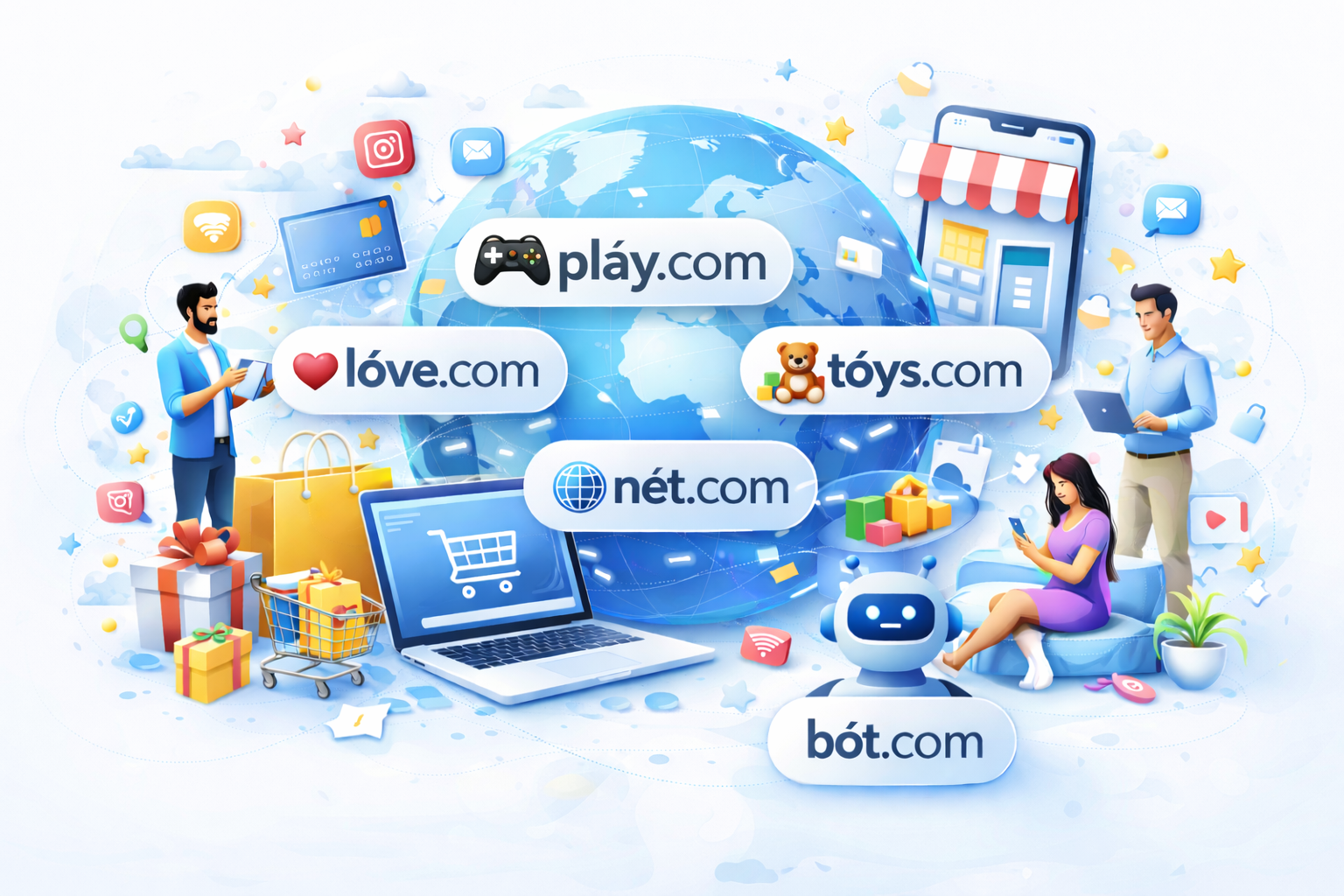
Examples like lóve.com, tóys.com, or nét.com remain instantly understandable while standing out from generic alternatives.
Users do not distrust accents — they recognize them as part of natural language and modern design.
Google and other major search engines fully support IDN domains. They index, crawl, and rank IDNs the same way they do any other domain.
From an SEO perspective:
In many cases, a visually distinctive IDN can even improve click-through rates in search results due to higher memorability and emotional appeal.
IDNs are not speculative experiments. They are scarce digital assets — especially when they are:
As traditional premium .com domains become increasingly unavailable, IDNs represent a natural next layer of scarcity in the domain market.
Many forward-thinking brands already recognize this and secure IDNs as long-term brand assets rather than short-term marketing tools.
The modern internet is:
In this environment, domain names are less about manual input and more about identity, storytelling, and visual presence.
IDNs align perfectly with this shift.
Concerns about IDN domains are rooted in the early days of the internet. Today, those concerns no longer reflect how users browse, search, or interact online.
IDN domains are:
When chosen carefully, an IDN is not a compromise — it is a strategic advantage.
Owning a strong IDN means owning a brand that stands out in a crowded digital world.